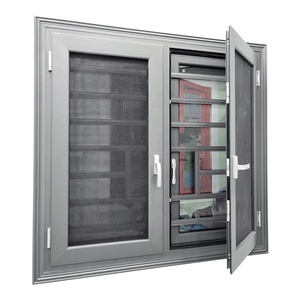
Architectural Catalog
Engineered OEM Kitchen Window Solutions
Explore our high-performance fenestration systems tailored for modern culinary layouts, pass-through entertaining zones, and rigorous international thermal standards.
Industry Whitepaper
The Architecture of Kitchen Fenestration: Micro-Climates & Thermal Barriers
A rigorous structural analysis on why residential culinary environments impose the most challenging environmental stressors on aluminum building envelopes.
In modern residential engineering and commercial multi-family development, the kitchen window is no longer considered a merely passive aperture for illumination. Kitchens generate an aggressive internal micro-climate characterized by intermittent thermal spikes, rapid relative humidity (RH) surges exceeding 85%, aerosolized grease particles, and elevated volatile organic and combustible gaseous emissions. When conventional non-thermal aluminum frames are deployed in these demanding spaces, structural physics dictates immediate failures: condensation formation along perimeter drywall, premature seal degradation, aluminum oxidation, and irreversible micro-organic mold colonization.
As an established OEM/ODM fenestration manufacturer rooted in Foshan’s high-precision industrial cluster, our approach engineers the kitchen window as a high-performance building envelope component. By implementing polyamide PA66 reinforced structural thermal breaks, multi-cavity extrusion profiles, and argon-charged insulated glass units (IGU), we effectively sever conductive thermal pathways between conditioned residential interiors and unforgiving external atmospheres.
Thermal Break Physics
PA66 GF25 fiberglass-reinforced polyamide thermal barriers isolate interior and exterior aluminum profiles, driving U-factors down to 1.4 W/m²·K and preventing internal surface condensation.
Corrosion-Resistant Finishes
Finished with marine-grade AkzoNobel powder coatings and fluorocarbon (PVDF) treatments that withstand continuous salt-spray exposures, oil splatter, and aggressive culinary steam.
Multi-Chamber Weep Drainage
Engineered pressure-equalized weep hole systems direct driving rains and condensed water outward, ensuring uncompromised water tightness even under intense monsoonal wind loads.
Market Intelligence
Future Procurement Trends in Architectural Kitchen Windows
Key evolutionary vectors transforming international window and door sourcing for project developers, fabricators, and commercial traders.
Global procurement analytics show a definitive shift away from off-the-shelf catalog windows toward customized, project-specific OEM solutions. Commercial builders in North America, Oceania, and Western Europe are mandated to hit stringent net-zero energy building codes, driving demand for kitchen-specific assemblies with balanced Solar Heat Gain Coefficients (SHGC). In response, leading developers are focusing capital investments on three key product categories:
| Window Architecture | Ideal Culinary Application | Thermal & Acoustic Efficacy | Air / Water Tightness Rating |
|---|---|---|---|
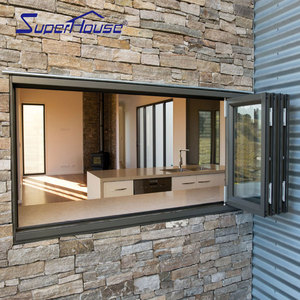
| Bi-Fold Gas Strut Pass-Through | Kitchen-to-patio entertaining, al fresco breakfast bars | U-value: 1.6 - 2.0 W/m²·K | STC: 32 dB | Class 4 Air Permeability | 450 Pa Water |
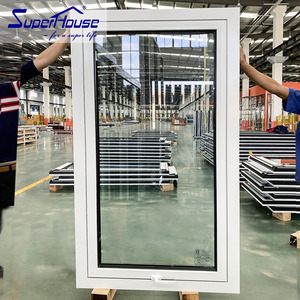
| Thermal Break Casement | Sink splash zones requiring rapid airflow extraction | U-value: 1.2 - 1.5 W/m²·K | STC: 40 dB | Exceeds AS2047 N6 & AAMA Severe Testing |
| Parallel Awning Systems | All-weather continuous ventilation during precipitation | U-value: 1.4 - 1.8 W/m²·K | STC: 36 dB | Class 3 Air Permeability | 600 Pa Water |
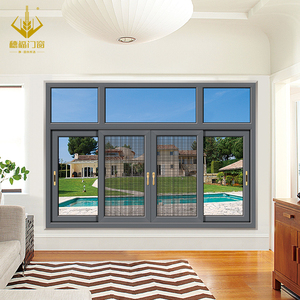
| Horizontal Triple-Track Slider | Confined kitchen spaces where swinging sashes conflict | U-value: 1.5 - 1.9 W/m²·K | STC: 34 dB | High Water Rating with Interlocking Stile Design |
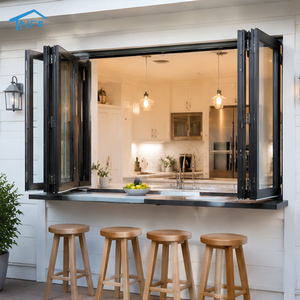
Beyond thermal profiles, biophilic indoor-outdoor integration has become the dominant luxury architectural trend. Folding kitchen pass-through windows allow culinary workspaces to connect directly with outdoor entertaining patios. By manufacturing flush-mounted sill options with concealed drainage channels, our engineering team eliminates tripping hazards while preventing insect entry via magnetic pleated flyscreens.
Manufacturing Rigor
Direct-from-Factory OEM Excellence in Foshan
Backed by Guangdong Dejiyoupin Doors and Windows Co., Ltd. (DERCHI)—widely acknowledged among China's Top 10 fenestration and door system innovators—our production base combines cutting-edge German CNC tooling with a quarter-century of extrusion and architectural hardware mastery.
180,000㎡ Mega-Scale Capacity: Consistent container-load delivery schedules for regional distributors and large-scale master-planned developments.
Global Standards Verification: Systems comprehensively tested to Australian AS 2047 N6, European CE, ISO 9001, and North American thermal compliance benchmarks.
Free Architectural Shop Drawings: In-house drafting teams supply precise CAD and BIM section drawings before die extrusion and fabrication begin.
Export-Grade Protective Packaging: Multi-layer shockproof foam wrapping, edge protectors, and steel-reinforced fumigated wooden crates ensure zero shipping damage.

Procurement Guide
Frequently Asked Questions: OEM Kitchen Windows
Essential technical and logistical answers for structural specifiers, procurement officers, and international importers.
Why is a thermal break non-negotiable for high-end residential kitchen windows?
Kitchens generate substantial humidity from cooking and dishwashing. When exterior winter temperatures drop, standard aluminum transmits cold straight into the interior sash, creating a thermal bridge. Moisture immediately condenses on the cold metal, fostering toxic black mold and ruining surrounding drywall. Structural thermal breaks stop this conductivity at the profile's core.
How does our production fulfill AS2047, CE, and international building codes?
Every window series is designed around certified extrusion wall thicknesses (typically 1.4mm to 2.0mm minimum structural 6063-T5/T6 alloy) and fitted with premium German or top-tier multi-point locking hardware. Systems undergo strict third-party test chamber evaluations for structural wind load resistance, air infiltration limits, water tightness, and operational cycling.
Can we manufacture custom pass-through bifold windows with integrated screens?
Yes. Customization is our primary core competency. For culinary servery configurations, we offer bottom-rolling and top-hung bifold systems equipped with heavy-duty stainless steel bearing tracks, alongside seamlessly integrated motorized or pleated retractable insect screens that preserve uninterrupted outdoor sightlines.
What is the standard OEM lead time, sampling workflow, and minimum order volume?
For custom profile extrusions and finishes, standard CAD shop drawing reviews take 48-72 hours. Once client sign-off is secured, standard factory production cycles range from 25 to 35 days. We accommodate low-volume initial trial orders for custom luxury projects, as well as full multi-container orders for commercial developments.