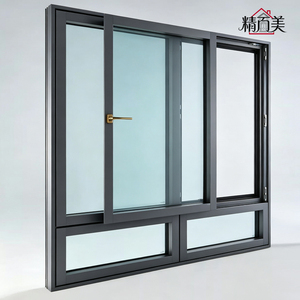
Certified Product Matrix
Canadian Specification fenestration Systems
Direct-from-factory architectural systems engineered for severe cold envelopes, high wind loads, and modern residential code compliance.
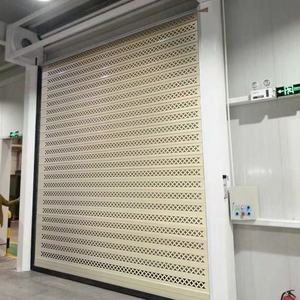
Aluminum Alloy Garage Door with Ventilation & Corrosion Resistance
View Specifications →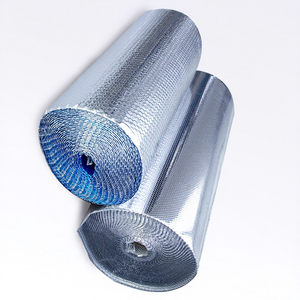
Custom Thickness Thermal Foil Bubble Window Envelope Wrap
View Specifications →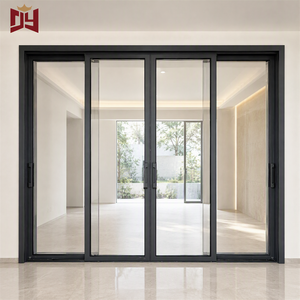
Waterproof Aluminium Sliding Doors for Multi-Family Residential
View Specifications →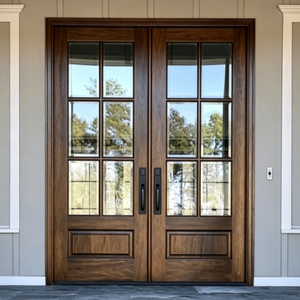
Luxury Aluminum Clad Wood Triple Glazed Acoustic Entry Door
View Specifications →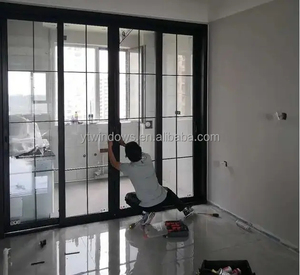
5-Track Double Tempered Glass Panoramic Sliding Door
View Specifications →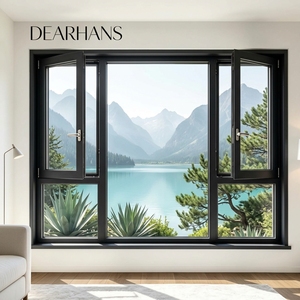
Soundproof Energy-Efficient Profile Casement Envelope Systems
View Specifications →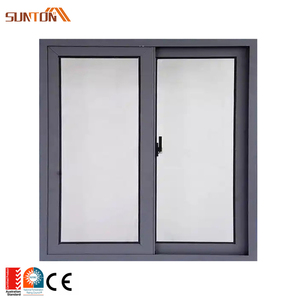
Interior Frosted Privacy Glass Architectural Sliding Sash Window
View Specifications →180,000㎡
Foshan Manufacturing Base
U≤1.22
W/m²·K Thermal Rating
CSA A440
Tested fenestration Standard
25+
Years Engineering Pedigree
Engineering Whitepaper
Canadian Climatic Engineering & Fenestration Mechanics
Deploying high-performance aluminium horizontal and vertical sliding sash systems across National Building Code of Canada (NBC) Zones.
Polyamide PA66 Thermal Barrier Engineering
Unlike typical commercial extrusions, our Canadian series utilizes multi-chambered, 34mm polyamide PA66 GF25 thermal breaks. This complete mechanical separation of internal and exterior aluminium chassis prevents thermal bridging, ensuring our frames retain condensation resistance (CR > 65) even during persistent -35°C deep-freeze conditions typical of the Prairie provinces.
Argon-Filled IGUs with Warm-Edge Spacers
Glazing configurations incorporate dual or triple IGUs utilizing Saint-Gobain or AGC Low-E coatings with 90% argon cavity fill. We deploy composite polymer warm-edge spacer technology, eliminating edge seal conductivity. This engineering configuration easily surpasses Canadian ENERGY STAR® Version 5.0 baseline criteria (U-Factor ≤ 1.22 W/m²·K / 0.21 Btu/h·ft²·°F).
Air-Water Structural Integrity (A440-14)
Sliding window sash tracks integrate stepped weepage management alongside multi-finned vulcanized EPDM and silicone-treated mohair weather seals. Tested according to AAMA/WDMA/CSA 101/I.S.2/A440 standards, the units achieve zero water penetration past 400 Pa and airtightness ratings rated at A3, protecting against heavy driving rain in coastal British Columbia and high prairie wind loads.
| Performance Metrics | Standard Market Aluminum | DERCHI Canadian Spec Series | Compliance Reference |
|---|---|---|---|
| Overall U-Factor (Window) | 2.40 - 3.20 W/m²·K | 1.14 - 1.25 W/m²·K | CSA A440.2 / ENERGY STAR® |
| Thermal Break Depth | None or 14mm PVC | 34mm Polyamide PA66 GF25 | ISO 10077-2 Validation |
| Air Infiltration Rating | A1 Level (≤ 1.5 m³/h·m) | A3 Level (≤ 0.5 m³/h·m) | CAN/CSA-A440-00 (R2014) |
| Water Resistance Test | 150 Pa - 200 Pa | ≥ 450 Pa Test Head Pressure | ASTM E331 / CSA A440 |
| Acoustic Attenuation (STC) | 26 - 28 dB | 38 - 42 dB (Acoustic Laminated) | ASTM E90 Sound Transmission |
Localized Applications
Engineered Across Canada's Geo-Climatic Regions
Strategic fenestration deployments matched to provincial environmental challenges and building codes.
British Columbia: Coastal Wind-Driven Precipitation
In the Lower Mainland, Vancouver Island, and the Okanagan Valley, fenestration faces high atmospheric moisture, salt fog, and driving coastal rainfall. Our sliding sash systems utilize AAMA 2605 fluoropolymer coatings (70% PVDF resin) guaranteeing resistance to chalking and marine atmospheric degradation, coupled with pressure-equalized rain-screen drainage tracks.
The Prairies & Ontario: Extreme Thermal Differentials
From Calgary and Edmonton down across the Greater Toronto Area, fenestration units endure 70°C annual temperature deltas (-35°C in midwinter to +35°C during summer). Our heavy-duty aluminium alloy 6063-T6 maintains precise dimensional stability without warping, binding, or seal rupture—issues commonly found in budget PVC vinyl sliding windows.
Quebec & Atlantic Canada: Deep Frost Cycles
Frequent freeze-thaw cycles present destructive conditions for sash roller channels and drainage outlets. DERCHI sash systems utilize solid SUS316 stainless-steel precision ball-bearing track mechanisms and internal heating capillary compatibility, preventing ice lock-up and ensuring frictionless glide cycles throughout Atlantic nor'easters.
Market Trends
The Canadian Transition: Toward BC Energy Step Code & Net-Zero
Regulatory shifts require builders to adapt envelopes to net-zero ready standards by 2030.
1. Phasing Out Unreinforced Vinyl
Canadian general contractors are actively replacing standard uPVC windows due to expansion-induced air leakage and high failure rates under modern high-span architectural layouts. Thermally broken aluminum delivers three times the structural strength, enabling slim profiles, larger glazing spans, and longer building life cycles.
2. Mandatory High Energy Step Codes
As jurisdictions like Vancouver enforce the BC Energy Step Code (Steps 4 and 5) and the Toronto Green Standard Version 4, builders require verified total-fenestration U-factors under 1.2 W/m²·K. Custom insulated glass units with warm-edge composite spacers provide developers a reliable path to pass envelope tests.
3. Acoustic Attenuation in High-Density Infill
With urban multi-family intensification (transit-oriented communities in Vancouver, Montreal, and Toronto), sound isolation has transitioned from luxury to code necessity. Integrating unequal glass thicknesses (e.g., 6mm + 4mm) alongside PVB laminated interlayers breaks harmonic sound paths, yielding STC performance exceeding 38 dB.
The DERCHI Advantage
Direct Manufacturing Muscle in Foshan, China
Guangdong Dejiyoupin Doors and Windows Co., Ltd. (DERCHI) combines industrial capacity, technical testing, and global export infrastructure.
180,000㎡ Modern Production Base
Equipped with automated German CNC cutting centers, computerized dual-corner crimpers, and precision laser profile machining. Our enterprise capacity of 600+ personnel supports multi-phase high-density Canadian multi-family contracts with on-schedule batch delivery.
Over 100 Patents & International Standards
DERCHI holds over 100 registered design/technology patents and global product verifications including CE, ISO 9001, Australian AS 2047, and UL fire-rated certifications. Every product schedule undergoes documented multi-stage dimensional and hydrostatic QC prior to ocean container loading.
Dedicated Engineering & Export Packaging
Our dedicated bilingual technical engineering team produces complimentary architectural CAD shop drawings and structural wind load calculations for Canadian projects. All units are shipped in full fumigated plywood crates with moisture-barrier films and corner protectors to ensure zero transit damage to Vancouver, Montreal, or Halifax ports.
Technical Clarifications
Frequently Asked Questions for Canadian Procurement
Clear answers covering CSA compliance, import logistics, thermal engineering, and warranty coverage.
How do your aluminium sliding sash windows comply with the National Building Code of Canada (NBC) and CSA A440?
Our Canadian-market windows are engineered in strict alignment with the North American Fenestration Standard (NAFS-11) and the Canadian CSA A440S1 supplement. This includes structural design against uniform load deflections, certified water penetration resistance past 400 Pa, and airtightness classified at the strict A3 level. We supply factory-direct testing documentation, glass IGCC/IGMA certifications, and CAD shop drawings to satisfy municipal building inspectors across all provinces.
Can your thermal break aluminum match or outperform uPVC (vinyl) windows in Canadian sub-zero winters?
Yes. While standard, un-broken commercial aluminium is thermally conductive, our Canadian systems incorporate high-performance 34mm Polyamide (PA66 GF25) thermal barriers coupled with multi-chamber interior construction. Combined with argon gas-filled, warm-edge triple glazing with Low-E coatings, our assemblies deliver U-Factors down to 1.14 W/m²·K. Unlike vinyl, which expands and contracts significantly under extreme Canadian temperature swings (-35°C to +35°C) causing air leakage and binding, our 6063-T6 aluminum retains permanent structural squareness and airtightness.
What surface finish is applied to prevent corrosion from Canadian road salts and marine coastal air?
For projects across coastal British Columbia and the Maritime provinces, or structures subject to de-icing chemical mist, we utilize AAMA 2604 or premium AAMA 2605 compliant PVDF fluorocarbon coatings, alongside architectural anodizing (20-25 micron thickness). These industrial finishes are tested against salt spray corrosion for over 3,000 hours, ensuring the frame will not peel, pit, fade, or chalk over decades of exposure.
How does DERCHI manage shipping logistics, sea freight transit, and customs clearance into Canada?
We provide full CIF (Port of Vancouver, Montreal, Halifax) or DDP (Delivered Duty Paid) door-to-jobsite logistics. Windows are packed in custom IPPC-certified fumigated structural plywood crates, isolated by foam cushions, desiccant packs, and waterproof shrink wrap. We coordinate with Canadian customs brokers to handle CBSA paperwork, tariff classification, and destination transport, providing full bill of lading tracking throughout the transit.
What is the standard manufacturing lead time for custom architectural project orders?
Upon final sign-off of our shop drawings and hardware schedule, standard fabrication spans 25 to 35 business days depending on custom extrusion or glass treatments (e.g., specific Low-E coatings or decorative tints). Ocean transit from Pearl River Delta ports (Shenzhen/Guangzhou) to the Port of Vancouver averages 14-18 days, and approximately 28-35 days to Eastern Canadian ports.
Plan Your Next Canadian Project with DERCHI
Submit your door and window schedule, architectural CAD files, or performance targets. Our engineering department prepares shop drawings and a comprehensive project estimate within 24 business hours.
Contact Us