Featured Architectural Envelope & Fenestration Assemblies
Engineered to integrate seamlessly with commercial stick and unitized curtain wall substructures, our precision aluminum systems satisfy rigorous thermal, acoustic, and wind-load performance thresholds across the Absheron Peninsula.
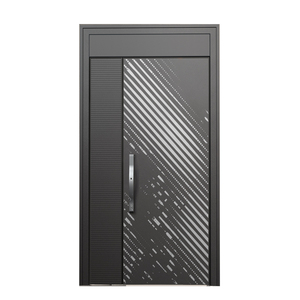
Newest Design Top Quality Villa Main Entrance Security Door Aluminum Swing Unequal Double Door
Thermal break multi-chamber aluminum profile, multi-point tamper-proof locking system, engineered for Caspian coastal salt spray resilience.
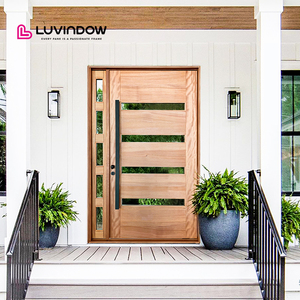
American Wooden Main Door Design Front Doors Modern TEAK OAK Solid Wood Commercial Entry Door
Architectural grade solid oak/teak core bonded with moisture barriers; provides high thermal damping and luxury commercial presence.
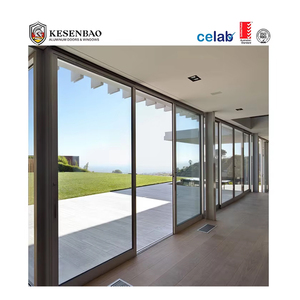
Australian Standard Aluminum Exterior Glass Sliding Door System Aluminium Double Triple Glazed
AS 2047 N6 certified for extreme cyclonic lateral pressures; structural double/triple IGU with argon filling for minimal U-value.
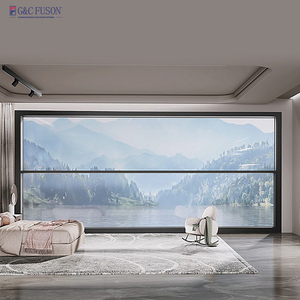
Fuson New Electric Lifting Intelligent Balcony Aluminum Window Home Windows Fold Up Windows
Motorized vertical opening sash integrates directly with curtain wall mullions for rooftop lounges, penthouses, and hospitality skyboxes.
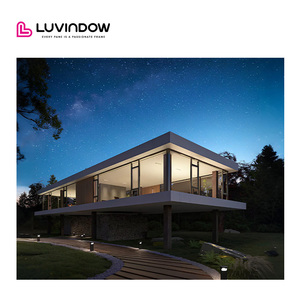
Luvindow Narrow Frame Aluminum Windows Full Glass Double Glazing Tilt Turn Windows
Ultra-narrow sightline profile designed for zero-interference façade insertions, concealed hardware, dual micro-ventilation positions.
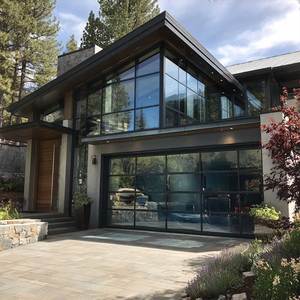
Sunnysky Full View Glass Garage Door Overhead Lifting Framed Moving Panel Doors
Anodized commercial-grade 6063-T6 aluminum extrusion with impact-resistant laminated glazing, optimal for car showrooms and retail podiums.
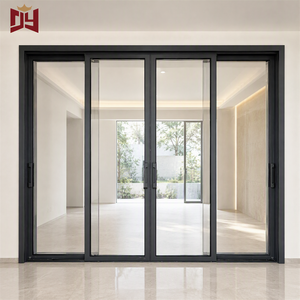
Waterproof Aluminium Sliding Doors Residential Projects Custom Size CE Certified
Engineered drainage sills with EPDM co-extruded gaskets preventing water ingress up to 900 Pa test pressure under driving coastal rains.
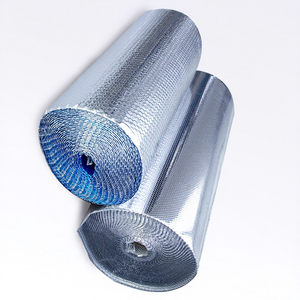
Custom Thickness Aluminum Foil Bubble Rolls Window Wraps Envelope Insulation Wrap
Reflective radiant barrier delivering thermal decoupling around spandrel panels, parapets, and perimeter curtain wall anchoring pockets.
Engineering Curtain Walls for Azerbaijan’s Unique Extreme Environmental Stresses
Azerbaijan represents one of the world's most demanding climatic crossroads for modern architectural building envelopes. Developing iconic skylines from Baku Bay to Ganja necessitates envelope systems engineered well beyond ordinary European or Asian baseline tolerances.
Resisting the "City of Winds" (Khazri Gale Pressures)
Baku's infamous cold northern wind, the Khazri, frequently unleashes hurricane-grade velocity gusts exceeding 144 km/h (40 m/s), generating positive gust wind pressures upwards of 2.4 kPa to 3.8 kPa on windward elevations and severe suction vortices along corner zones. Our curtain walls utilize reinforced 6063-T6 and 6061-T6 structural mullions with customized high moment of inertia (Ix ≥ 480 cm&sup4;) and finite element wind-load calculation models to prevent framing deflection beyond L/200, eliminating structural fatigue and glass breakage.
Seismic Zone 8–9 Articulated Slip Joints
The Greater Caucasus and Absheron seismic fracture networks classify Eastern Azerbaijan under MSK-64 scale seismic intensity levels of VIII to IX. Conventional rigid stick facades risk catastrophically shattering under inter-story lateral drift during earthquake events. DERCHI’s engineered unitized curtain wall systems incorporate 3D slotted bracket assemblies and serrated friction washer plates capable of accommodating dynamic racking displacements of ±25 mm without transferring shear stresses into insulated glass panels.
Thermal Damping for Baku’s Semi-Arid Microclimate
Azerbaijan’s maritime continental climate swings from scorching summer UV peaks exceeding +40°C down to sub-zero freeze-thaw cycles during winter blizzards. Achieving compliance with the latest Azerbaijani national energy conservation codes (AZS 831) demands multi-cavity polyamide (PA66 GF25) thermal barrier strips (≥ 34mm) combined with triple-silver Low-E IGU configurations, achieving overall curtain wall thermal transmittance values down to Ucw ≤ 1.1 W/(m²·K) and Solar Heat Gain Coefficient (SHGC) ≤ 0.28.
Architectural Façade Applications Across Baku & Azerbaijan Municipalities
From high-profile public developments and corporate headquarters in Baku White City to Caspian resort properties in Bilgah and petrochemical administrative campuses in Sumqayit, customized curtain wall typologies solve distinct functional briefs.
Baku White City & Heydar Aliyev Avenue Corridors
Mixed-use commercial towers and premium residential towers require pre-fabricated unitized glass curtain walls allowing rapid crane installation along busy arterial roadways. High acoustic dampening (Rw ≥ 42 dB) cancels heavy vehicular traffic noise while delivering expansive floor-to-ceiling visual continuity.
Bilgah, Mardakan & Sea Breeze Waterfront Resorts
Waterfront villas, high-end hotels, and convention centers exposed to marine salt fog and sand-laden winds. Our fluorocarbon PVDF coating (3-coat system ≥ 40 microns) and marine-grade A4 (316) stainless steel anchors prevent pitting corrosion, peeling, and electrolytic degradation over a 30+ year lifecycle.
Sumqayit Chemical Park & Alat Free Economic Zone
Industrial administration centers, logistics dispatch hubs, and corporate HQs demanding fire-rated spandrel integrity (EI 60/120), blast-mitigation laminated glazing layers, and robust integration with automatic louvers and high-security automated entrance portals.
Ganja, Lankaran & Shusha Modernization Initiatives
Civic cultural buildings and boutique hospitality projects undergoing post-conflict restoration and regional modernization. Stick-built facade systems provide versatile architectural geometric flexibility, integrating localized sandstone veneer trims with modern high-performance structural curtain walls.
| Curtain Wall System Type | Ideal Application in Azerbaijan | Wind-Load Resistance (P1) | Thermal Transmittance (Ucw) | Seismic Displacement Rating |
|---|---|---|---|---|
| Pre-Glazed Unitized Curtain Wall | High-rise towers in Baku downtown & White City | Up to 4.2 kPa | 1.0 – 1.3 W/(m²·K) | Class 3 (±30 mm inter-story slip) |
| Structural Silicone Glazed (SSG) Stick System | Podiums, boutique museums & auto retail pavilions | Up to 2.8 kPa | 1.2 – 1.5 W/(m²·K) | Class 2 (±15 mm joint articulation) |
| Point-Supported Spider Glass Fin Façades | Grand hotel atriums, airport terminals & civic lobbies | Up to 2.4 kPa | 1.4 – 1.8 W/(m²·K) | Engineered Spring Arm Dampers |
| Double-Skin Dynamic Breathable Cavity Walls | Zero-energy corporate HQs & green bank institutions | Up to 4.8 kPa | 0.8 – 1.0 W/(m²·K) | Class 3 (±35 mm seismic drift) |
Azerbaijan’s Modern Façade Trends: Decarbonization, LEED & Smart Building Codes
The architectural market in Azerbaijan is transitioning from traditional monolithic masonry with decorative stone tiling toward ultra-lightweight, high-efficiency, fully glazed building skins driven by COP29 climate commitments and national economic diversification.
COP29 Commitments & Green Building Certifications
With Baku hosting major international environmental forums like COP29, developers are aggressively mandating LEED Gold/Platinum and BREEAM certifications for institutional real estate assets. Façade assemblies must contribute significant points in Envelope Commissioning (EA), Daylight Optimization (IEQ), and Recycled Material Content (MR). Our curtain walls utilize 100% recyclable billet aluminum melted using clean hydro-electric energy sources, featuring Environmental Product Declarations (EPD) that satisfy international auditors.
Harmonization of SNiP and European Norms (EN)
Historically governed strictly by Soviet-era SNiP standards, Azerbaijan’s State Committee for City Planning and Architecture (Dövlət Şəhərsalma və Arxitektura Komitəsi) is systematically harmonizing localized regulations with European Eurocodes (EN 13830 for Curtain Walling, EN 1991 for Actions on Structures, and EN 12154 for Watertightness). DERCHI provides dual-standard engineering calculations, ensuring seamless municipal plan review approval by Baku State Design Institute (Bakıdövlətlayihə).
Integrated BIPV & Automated Microclimatic Skins
With solar irradiance in the Absheron Peninsula averaging 1,900 to 2,200 kWh/m² annually, forward-looking architectural designs are increasingly specifying Building-Integrated Photovoltaics (BIPV) inside curtain wall spandrels and sun-shading brise-soleil profiles. Our R&D engineering department custom-fabricates wiring chases and junction box pockets directly into extruded aluminum profiles, transforming high-rise facades into clean energy harvesting stations.

Foshan Headquarters • Top 10 High-End Architectural Door & Glazing Enterprise in China
Global Façade Engineering Capability Direct to Azerbaijani Project Sites
As one of China's most trusted manufacturers with over 25 years of specialized technical craftsmanship, DERCHI delivers an unmatched combination of heavy-scale capacity, engineering precision, and direct export logistics for general contractors across Azerbaijan.
Frequently Asked Questions by Azerbaijani Developers & General Contractors
Key insights regarding customs clearance, shipping timetables to Baku, local structural compliance, and warranty guarantees for importing architectural curtain wall systems from China.
Our façade engineering department specifically designs to exceed AZS and SNiP II-7-81 (Construction in Seismic Regions) and SNiP 2.01.07-85 (Loads and Actions). Every batch of custom profiles is accompanied by structural calculation books, third-party wind tunnel or static chamber test certificates (under EN 13830 / AS 2047 benchmarks), and factory quality affidavits certified under ISO 9001:2015 for immediate submission to the State Agency on Control over Safety in Construction of the Ministry of Emergency Situations of Azerbaijan (FHN).
Shipments typically utilize two established corridors: (1) Ocean multimodal freight routed via Poti/Batumi (Georgia) followed by rail/truck connection directly into Baku (approx. 28–35 days ocean transit); or (2) Direct China-Europe/Central Asia railway container expresses routed via the Middle Corridor across Kazakhstan and the Caspian Sea directly into Alat Port (approx. 18–24 days). Our factory prepares all required export manifests, EUR.1 / Certificate of Origin, and customs documentation for streamlined clearance through the State Customs Committee of Azerbaijan Republic.
Baku’s external ambient temperatures vary from -5°C during winter northerlies to over +42°C on unshaded summer facades (with surface metal temperatures reaching +75°C). This ~80°C delta requires an expansion allowance of approximately 1.8 mm per linear meter of aluminum. We engineer telescopic sleeved expansion mullion couplings with internal EPDM glide strips and non-curing polyisobutylene secondary weather seals, allowing frictionless thermal movement while maintaining permanent airtightness and zero joint creaking.
Yes. For projects over 2,000 square meters, we routinely manufacture full-scale 1:1 Performance Mockups (PMU) in our facility, conducting pre-delivery air infiltration, static water penetration (up to 1,000 Pa), dynamic water testing, and structural safety tests. Additionally, we can ship visual mockups (VMU) directly to your job site in Baku or Ganja to allow owners, architects, and municipal committees to review glass tint, reflectivity, mullion sightlines, and joint quality in real daylight before mass manufacturing begins.
Plan Your Next Architectural Landmark in Azerbaijan
Send us your project CAD elevations, BIM models, or architectural window/curtain wall schedules. Our senior façade engineers will provide a complete structural wind-load assessment, thermal insulation proposal, and a competitive factory-direct quote within 24 hours.
Get a Quote